


Discover our common applications
What is a Queue Warning System?
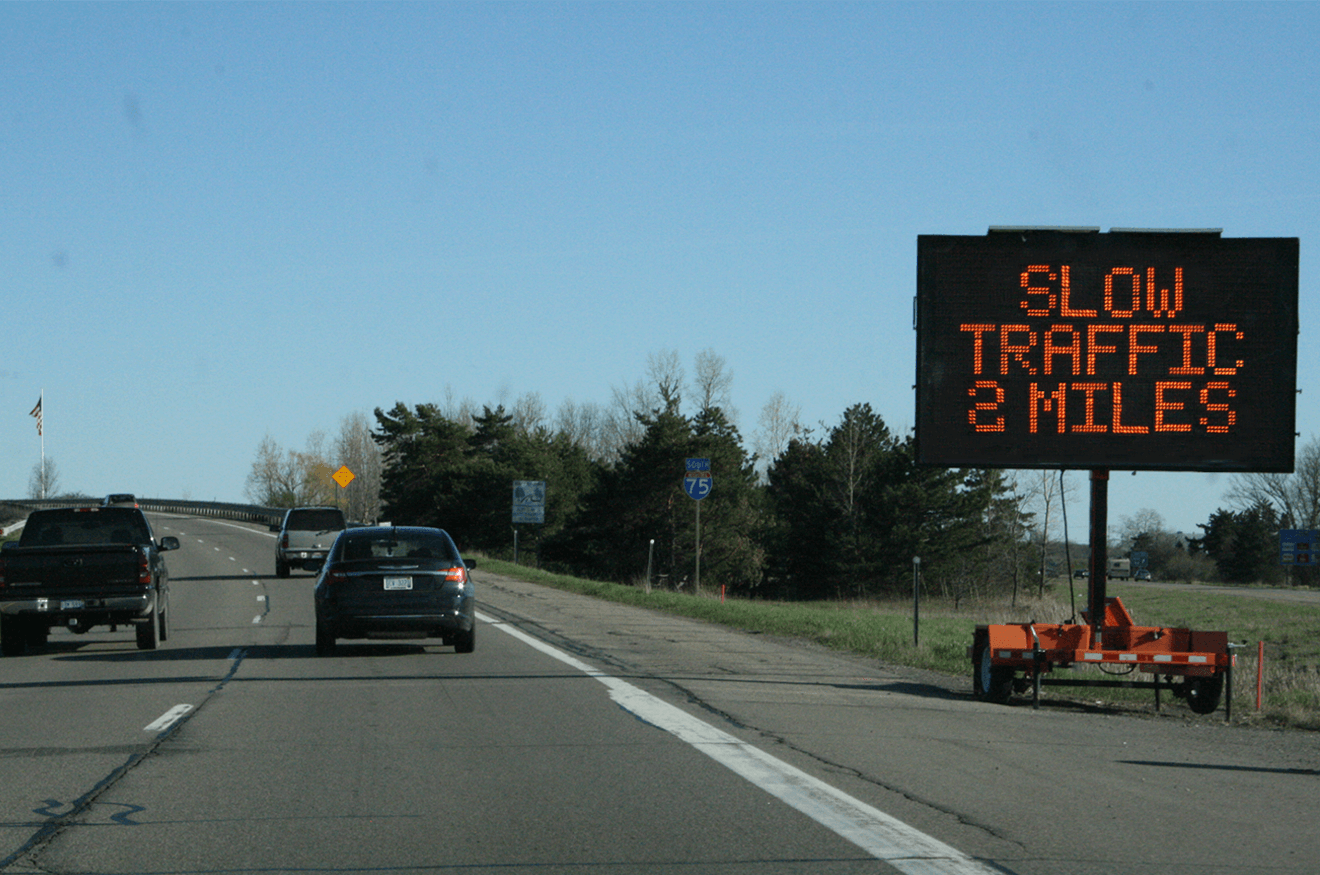
Queue warning systems alert motorists to upcoming traffic conditions like queues and congestion, giving them more time to slow down, adjust their driving, and approach the work zone safely.
A study led by the US DOT has shown that Queue Warning Systems (QWS) reduce the potential for rear-end crashes by 18 to 45% on work zone approaches.



Applications
The Queue Warning System (QWS) is typically used in the following applications:
- Highway paving and bridge closures
- Short-term maintenance lane closures
- Long-term lane closures where frequent queues are projected to occur
- Exit ramp queueing onto the highway
- Backups due to special events

What are the Benefits of an Automated Queue Warning System?
Safety
- Improved safety through advanced driver awareness
- Up to 45% reduction of rear-end crashes
- Fewer work zone intrusions
- Enhanced mobility through speed harmonization

Flexibility
- Scalable: can be adapted to work zones of all sizes
- Quick to deploy
- Portable, dynamic, and automated
- For short or long-term queue warning applications

Cost Savings
- Most cost-effective SWZ application
- Uses equipment that is typically already deployed or readily available
- According to workzonesafety.org : 10% of congestion nationally is due to work zones, which translates to billions lost yearly in delays, damage and personal injury

Features
- Remote management via JamLogic
- Detailed equipment and event logging
- Automatic congestion alerting via text or email (optional)
- Heat map performance reports (optional)


Frequently Asked Questions about Queue Warning Systems
What is a Queue Warning System?
Through real-time data collection and automatic publication of circulation information, a Queue Warning System informs drivers of downstream traffic conditions.
How can a queue warning system improve safety in work zones?
Since motorists can slow down, merge or brake before reaching the work zone (or congested area), the risks of crashes and thus injuries, are significantly diminished through greater driver awareness.
Which industries typically use automated queue warning systems?
Queue Warning Systems are generally used by the highway and roadway construction industries, as well as special event managers.